

Huehuetenango: The Region That Earns Its Reputation
Huehuetenango: The Region That Earns Its Reputation
If you ask me to name a favorite coffee region, I won't hesitate. Huehuetenango. It has been the answer for a long time — long before Altiplano Reserve existed, and long before I had the vocabulary to explain why. This post is my attempt to give that answer the context it deserves.

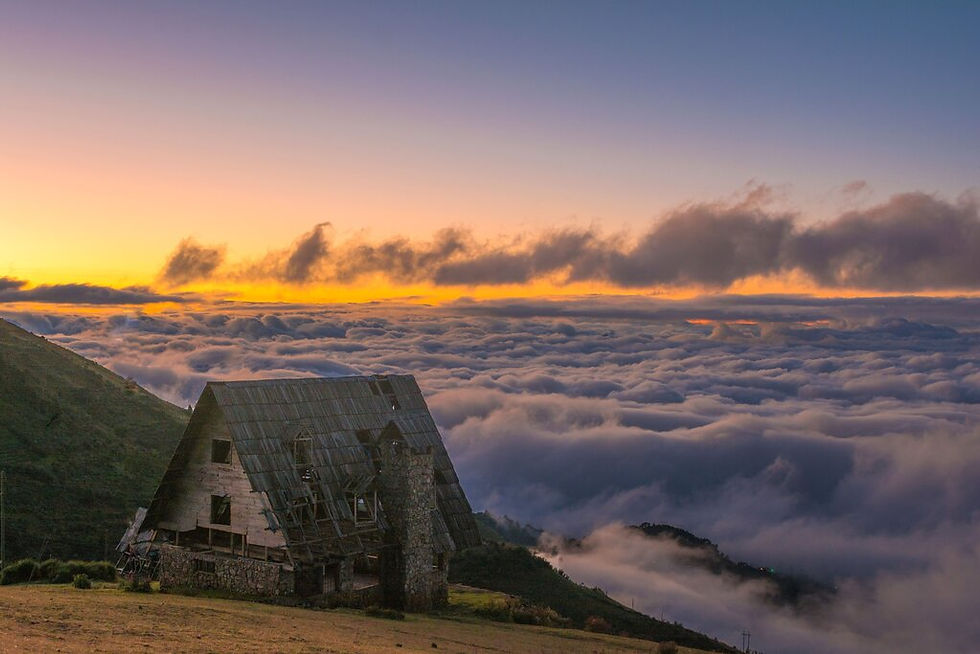
Located in the northwestern highlands of Guatemala, Huehuetenango is one of the country's most remote and rugged departments. The Sierra de los Cuchumatanes — the mountain range that dominates the region — is the largest non-volcanic massif in Central America, with ridges and slopes that push coffee farms to elevations between 1,500 and 2,000 meters above sea level. That altitude is not incidental. It is the engine behind everything that makes Huehuetenango coffee distinctive.

Why Altitude Matters
At high elevations, temperatures drop and the coffee cherry matures slowly. A slower maturation means more time for the sugars, acids, and aromatic compounds inside the cherry to develop complexity. The result is a denser bean with more nuanced flavor — brighter acidity, more pronounced fruit notes, and a clarity in the cup that lower-altitude coffees rarely achieve.
Huehuetenango benefits from an additional geographical advantage: hot, dry winds that blow in from Mexico's Tehuantepec plain protect the high slopes from frost, making it possible to grow coffee at elevations that would otherwise be too cold. This combination — extreme altitude without the frost risk — creates conditions that are genuinely rare in the coffee-growing world.

The Flavor Profile
Huehuetenango coffees are known for brightness. Where other Guatemalan regions like Antigua or Atitlán tend toward chocolate and caramel — rich, round, approachable — Huehuetenango leans toward fruit and acidity. Depending on the farm, the variety, and the processing, you might find notes of stone fruit, dried apple, citrus, or berry. The acidity is often described as malic — crisp and clean, like biting into a fresh apple rather than the sharper, more aggressive acidity of East African coffees.
Washed processing, which is the standard in the region, amplifies these characteristics. By removing the fruit before drying, wet processing allows the coffee's inherent terroir to come through without interference. What you taste in a well-roasted Huehuetenango is the place itself — the soil, the elevation, the microclimate — expressed through the bean.
How I Got Here
My first real introduction to Huehuetenango was a Huehue Bourbon from El Injerto that I bought from a boutique store in Antigua. If you know, you know — El Injerto is one of Guatemala's most celebrated estates, and their Bourbon lots are the kind of coffee that quietly recalibrates your expectations. That cup was the moment I stopped thinking about coffee as a beverage and started thinking about it as a place.
From there, Huehuetenango became a thread I kept following. For years, my perennial favorite was the Huehuetenango offering from Crossroads Café in Panajachel — a small café on the shores of Lake Atitlán that understood what it had access to and treated it accordingly. Drinking that coffee in Panajachel, at altitude, surrounded by volcanoes, with a clear view of the lake — that is not a neutral sensory experience. It shaped how I understand the relationship between place and cup in a way that no amount of reading could have.
Those experiences are part of why Altiplano Reserve exists, and why Huehuetenango is central to what we offer.
The Farmers Behind the Cup

What often goes unmentioned in conversations about Huehuetenango is how the geography that makes the coffee great also makes farming it extraordinarily difficult. These are steep, remote slopes. Many farms sit at the end of roads that are barely passable by vehicle, in communities that were historically cut off from specialty markets entirely.
For decades, smallholders in the region had little choice but to sell their cherry to large processors in the valleys below — losing control over quality and receiving commodity prices regardless of how exceptional their coffee was. Programs like Proyecto Xinabajul, which works directly with small producers in the Sierra de los Cuchumatanes, changed that dynamic. By cupping individual lots, setting parchment prices directly with farmers, and creating access to the specialty market, projects like this gave high-altitude smallholders something they had never had: the ability to be paid what their coffee is actually worth.
Farmers like Axel Palacios represent what that shift looks like in practice — growing Bourbon variety coffee on steep ridges, processing through shared infrastructure, and delivering lots that are traceable to the farm level. This is not the anonymous commodity supply chain. It is the opposite of it.

A Word on Roast Philosophy
There is a tendency in American specialty coffee to roast light — and for some coffees, particularly delicate naturals or high-grown Ethiopians, that approach makes sense. But roast philosophy should follow the coffee, not the trend.
For Bourbon, Caturra, and Catuaí — the varietals that dominate Huehuetenango's traditional farms — we roast to a Full City Plus. These are varietals that reward development. At lighter roasts they can taste underdeveloped, thin, or overly acidic in ways that obscure rather than reveal the coffee's character. Taken further, to the point where caramelization is complete and the sugars have fully developed, you get what Huehuetenango is actually known for in Guatemala: dark chocolate, caramelized sweetness, full body, and a structured bittersweet finish that lingers.
For more delicate varietals like Maragogype — a large-bean mutation known for its lighter body and pronounced floral aromatics — we pull back to a City Plus. The goal there is different: preserve the floral notes that make Maragogype distinctive while still pushing far enough into development to bring forward caramelized sugar and cocoa tones. Same region, same sourcing standards, different coffee — different roast.
This is how the coffee is understood and appreciated in the country where it is grown. We think that context matters. We are not roasting for a trend. We are roasting for the coffee.

What We Look for in a Huehuetenango
At Altiplano Reserve, we focus exclusively on Guatemala, and Huehuetenango is central to why. The region's range is remarkable — within a single department you can find coffees that are delicate and floral, others that are structured and fruit-forward, and others still that have the kind of bittersweet complexity that holds up beautifully through a range of roast levels and brewing methods.
What we look for specifically is clarity and traceability. We want to know the farm, understand the processing, and be confident that what's on the label reflects what's in the bag. Huehuetenango's best coffees reward that level of attention. They are not coffees that hide behind a blend or a brand. They are coffees that can stand on their own — and do.
A Note on Pronunciation
Before you go: it's "Way-way-teh-NAHN-go." You're welcome.
If you've never had a Huehuetenango coffee, our current offering from Axel Palacios of Proyecto Xinabajul is a good place to start. It's a washed Bourbon grown at high elevation in the Sierra de los Cuchumatanes — everything the region is known for, in a single cup. Also look for the Maragogype coming soon from Finca Vista al Bosque by Wilmar Castillo.


Comments